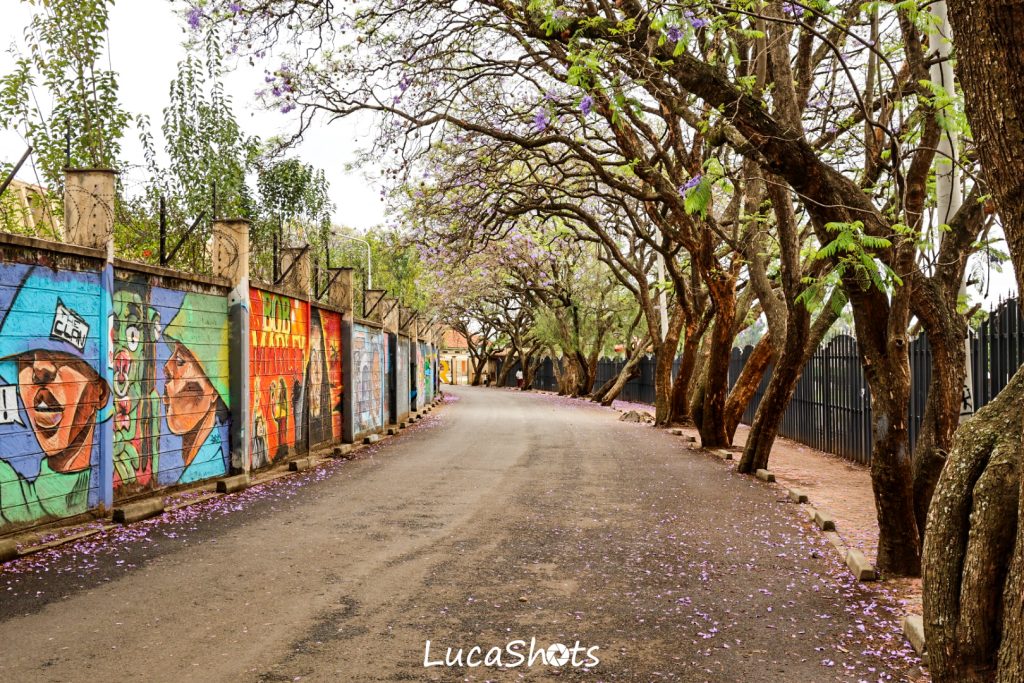
I grew up in Nairobi but have never walked through the city like a tourist, kwanza with my camera in hand. Well, that changed last Saturday. For the first time, I felt like a tourist in a city that I’ve spent years crisscrossing too hurriedly to notice. My rela Sam, invited me on a walking tour down memory lane to learn the history of Nairobi’s CBD. I found that quite creative. Maybe it’s because I have never viewed my city through that lens, even though I’ve taken city tours abroad. The county government should seriously consider championing city tours for both locals and tourists. It might just earn Governor Sakaja some much-needed Bonga Points.
Our group of 12 met at Longonot Place for a 9 am start. After a quick briefing on the route, we set off. The walk was scheduled to take roughly four hours. With a water bottle in hand, my bucket hat on, and my camera ready to shoot, we hit the streets. Rhoda, one of our knowledgeable guides, started us off on Harry Thuku Road. Contrary to what I thought, Harry Thuku wasn’t a freedom fighter. He was a coffee farmer who was agitating for land, political and economic rights for his fellow Africans. His activism got him arrested and detained at the Central Police Station. Kenyans did their maandamano thing and protested his arrest.
Among them was a woman called Muthoni Nyanjiru, who rallied her fellow Kenyans to demand Thuku’s release. She threatened to strip and wear trousers like a man to take on the cops. Armed officers lined up at one end of the street. Muthoni and the crowd stood at the opposite end, near the Norfolk Hotel. The askaris opened fire on the protestors, killing several people. Eventually, Harry Thuku was exiled and later allowed to return to his farm. He lived a quiet life from then on. Maybe the trauma he suffered in that ordeal made him forever hold his peace. That’s how that street got its name. Now you know, hehe.
We crossed the University Way footbridge onto Muindi Mbingu Street, where Jeevanjee Gardens sits. Jevanjee was an Indian who came to Kenya during the construction of the railway line. I thought he was one of the railway workers, but I learnt that he was actually a businessman who later donated the gardens for public recreation. Turns out Muindi Mbingu was actually the name of a Kamba man. I had always assumed that he was another Indian, since muindi is Swahili for an Indian person. And more so because it’s the very street where Jeevanjee Gardens is located!
Next, we reached City Market, which I have visited many times to buy meat. It was my first time looking up at the non-meat-selling section. I felt like I was in a cathedral. High, arched roof with windows on the sides that reach all the way up. Quite a work of architecture. We went on to GPO via Koinange Street. Another surprise was a landmark I had noticed but never given much thought to. It’s an old monument with a round stone ball seated on top. When you ask for a pin of Nairobi, that’s the point at which it starts. Distances from Nairobi to any other place globally are measured from that point.
We continued our city tour through a few more monuments and old buildings. We learnt something about them, like the Macmillan Library, Jamia Mosque, the old Standard Chartered building on Kenyatta Avenue, and the Supreme Court buildings. We ended our tour at the Railway Museum. It was my first time there. We were taken through the railway’s history and all the drama that came with it. I must give it up to the folks who came up with this idea. It was insane to think of building a railway line through such rough and unforgiving terrain. No wonder it was called the Lunatic Express. The cost of it in lives and resources was unimaginable. Still, as the saying goes, it always seems impossible until it’s done.
We saw the cutlery used by Queen Elizabeth on the train when she was here. She arrived as a princess and returned to England a queen. Those old wagons were on display in the yard. I remembered taking the old overnight train to Mombasa for a school trip many years ago in primary school. I wish I could do that with my baby sharks. I even saw the actual wagon where a mzungu used himself as bait to capture the man-eating lions of Tsavo. He fell asleep while waiting to shoot them. The hunter became the hunted. I held the claws of those lions in my hands and could only imagine how vicious they must have been. Their stuffed bodies are in a museum in Chicago, where they were sold. I think it’s time they were returned here, as they are part of our history.
I would have continued with the tour, but we got hungry, so we Ubered back to Longonot Place. So much has shaped who we are and where we live, much of which we may not know about. After that tour, I appreciated those who came before us more. They made Nairobi a place for us to grow and thrive in. The question is, what contribution will I make to improve this city and the lives around me so that when they talk about me, they can highlight some positive influence I left for them?
If Nairobi were a person, then I’d say we got a bit more acquainted, and I appreciate them more now for the role they have played in my life. Folks, if your life were a city and we took a tour through it, what would we find? What would you not want us to find? And what can you do now so that we find what you’d be proud of?
Thank you, Uncle Sam, for the tour. And speaking of tours, webinar 3 on 27th November will be about your transition story. We shall look at our life journey so far and how we can pick clues from our past that would help us find and live a fulfilling second half of life. Register here.
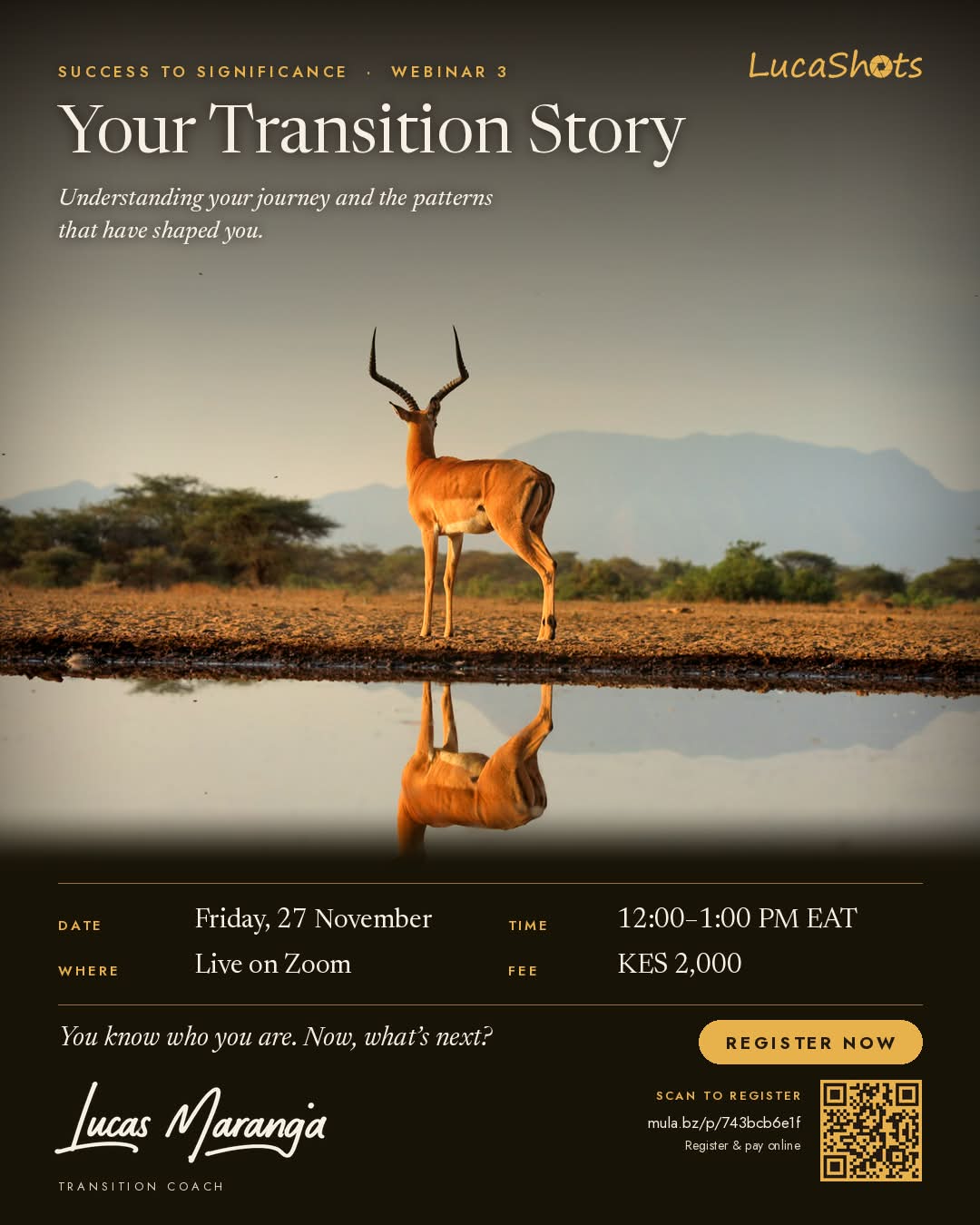
Webinar 3 is now open for registration.
You have started asking who you are beneath the titles. Now let's look at the journey that brought you here, and the patterns that have shaped you along the way.
Friday, 27th November12:00 – 1:00 PM (EAT)
Live on Zoom
KES 2,000
MYou know who you are. Now, what's next? Come and find out, and bring a friend or colleague who needs this conversation.
Register Here
Karibu sana, Lucas! You forgot to mention that the orb on Kenyatta Avenue is the Galton Fenzi Memorial, erected in honour of the man who pioneered motoring in Kenya and was the first to drive from Mombasa to Nairobi and back. Quite an interesting piece of Nairobi’s motoring history!
Anyone else interested in the tour karibu, gm@longonotplace.co.ke and we shall facilitate.